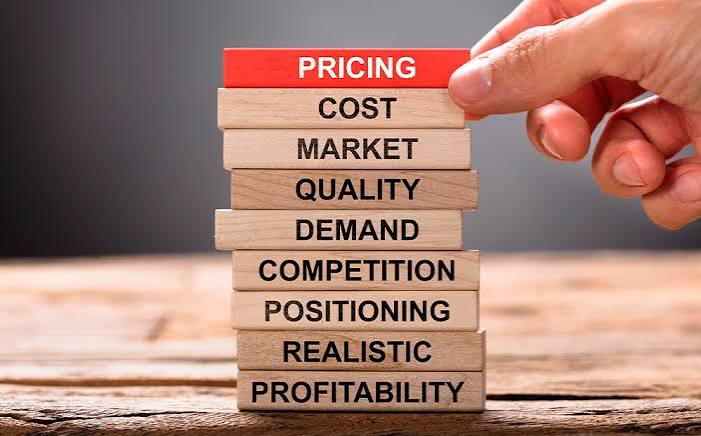
Getting your export price right is a balancing act — price too high and you lose the deal to a competitor; price too low and you fund your buyer’s margin instead of your own. Many first-time exporters either guess at pricing or simply match whatever their local market price looks like, without ever building a proper cost stack. Here’s how to actually calculate it.
1. Start with your total landed cost
Before you can price anything, you need to know what the shipment actually costs you, end to end:
- Product/sourcing cost — what you pay to acquire or produce the goods
- Processing/quality control costs — cleaning, sorting, drying, packaging to export specification
- Local logistics — inland transport to your processing point and then to the port
- Compliance and documentation costs — NEPC fees, product-specific certification, CCVO, NXP processing
- Pre-shipment inspection fees — typically calculated as a percentage of your shipment’s FOB value
- Freight and insurance — this varies significantly depending on your Incoterm (more on that below)
- Bank charges — fees associated with processing your Form NXP and receiving payment
Add these together and you have your true landed cost — the baseline below which you cannot price without operating at a loss.
2. Understand Incoterms — they change what “your cost” actually includes
Your quoted price depends heavily on which Incoterm you’re using:
- FOB (Free on Board) — you’re responsible for costs up to loading the goods onto the vessel; the buyer covers freight and insurance from there
- CIF (Cost, Insurance, Freight) — you cover freight and insurance all the way to the buyer’s port, so your price needs to absorb those costs
- EXW (Ex Works) — the buyer takes on almost everything, including pickup from your facility
Most Nigerian exporters, especially first-timers, start with FOB terms since it limits your exposure to international freight cost fluctuations and insurance complexity. Confirm which Incoterm you’re quoting under before calculating your price — quoting FOB pricing under CIF terms is a common and costly mistake.
3. Build in your margin — deliberately, not as an afterthought
Once you know your landed cost under the relevant Incoterm, add your target margin on top. This should be a deliberate multiple applied to your cost base, not a number picked because it “feels competitive.” A margin that’s too thin leaves no room for the inevitable — a delayed shipment, a minor inspection correction, a currency fluctuation between quoting and payment.
4. Factor in currency and exchange rate risk
Export payments typically come in via foreign currency, converted to naira through your bank as part of your NXP reconciliation. Between the time you quote a price and the time you’re actually paid, exchange rates can move — sometimes significantly. Build a buffer into your pricing to absorb reasonable currency fluctuation, rather than pricing at the exact edge of your cost base.
5. Benchmark against the market — but don’t just copy it
Research what comparable Nigerian exporters or competing origin countries are charging for similar quality and grade. This tells you what buyers expect to pay, but shouldn’t be your only input — a competitor’s price only makes sense for you if your own cost stack supports it. Underpricing to match a competitor whose cost structure you don’t understand is a fast way to lose money on a “successful” deal.
6. Recalculate for every shipment, not just once
Input costs shift — sourcing prices, freight rates, inspection fees, and currency all move over time. A price that worked for your last shipment isn’t guaranteed to still cover your costs on the next one. Treat pricing as a per-transaction calculation, not a fixed number you set once and reuse.
A common first-timer mistake
Pricing based only on product cost, while forgetting compliance fees, inspection costs, and bank charges, is one of the most common ways new exporters discover — after the deal is done — that their “profitable” shipment barely broke even. Your cost stack has to include every line item from sourcing to payment reconciliation, not just the product itself.
Conclusion
Your export price isn’t just “cost plus a margin” — it’s your full landed cost, calculated correctly under the right Incoterm, with a deliberate margin and a buffer for currency risk, benchmarked against but not dictated by the market.
Need help navigating this process?
Refod Global helps exporters build accurate cost stacks and pricing models that protect their margin from sourcing through payment reconciliation. Get started to have your pricing reviewed before you quote your next buyer.